The Model 23*

1913 Only
The Model 23 was the only known movement with a bridge design and was offered in four grades, including a 17-jewel Adjusted-3-Position with gold inlay on the plate engravings. It was apparently offered for the first time with the Model 22, and it's bizarre that the company would tool up to manufacture not one, but two 12-size movements when their sales were slumping toward the end of watch production.
* This is an assigned model number
Grade Assignment
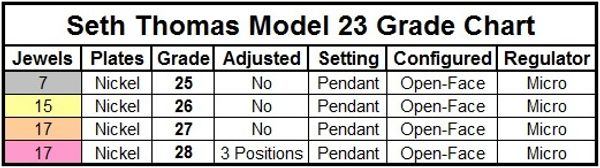
Four pendant-set grades were listed in the 1913 catalog and described in detail. The three higher grades came with ruby jewels in gold settings and a polished gilt gear train, and all four came with a micro-regulator. No contract grades or private labels have been reported.
Fancy Dials

The factory offered this notice about dial upgrades to the 12-size Model 23, but to date no example has been reported with a fancy dial or anything beyond the standard red/black Arabic dial.
Period Ad Cuts
1913
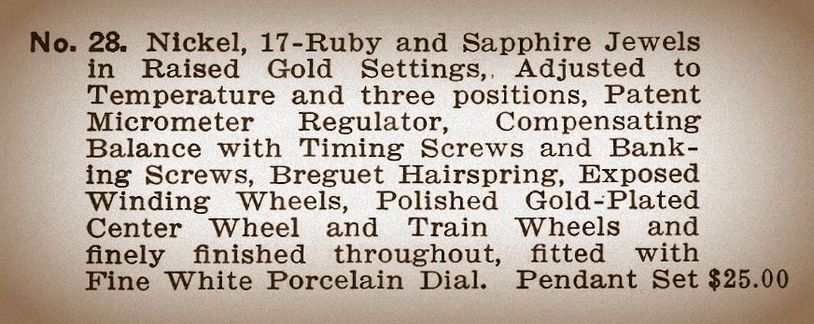
In the Centennial catalog the 21-jewel Maiden Lane was selling for $50, so the $25 price tag on the 17-jewel Adjusted-3-Position Grade 28 as a men's dress watch was considerable. These watches were available in "very thin special" cases.

Pocket Watch Restoration
Your antique watch can be restored! Have it looking great again and running like it just left the factory.